
Today’s Outlook :
• US MARKET : Wall Street closed lower on Friday amid a broad risk-off sentiment. Pressure came from heavy sell-offs in precious metals trading as well as producer inflation data that came in hotter than expected. The main focus of the day was U.S. President Donald Trump’s nomination of former Federal Reserve Governor Kevin Warsh as the next Chair of the central bank. The S&P 500 fell 0.4% to 6,939.65, the NASDAQ Composite declined 0.9% to 23,461.82, and the Dow Jones Industrial Average dropped 0.4% to 48,892.47. Warsh’s nomination is expected to ease concerns over the Fed’s independence, given his track record and historically hawkish stance. Meanwhile, Trump also publicly endorsed a bipartisan spending deal between Senate Republicans and Democrats to avert a government shutdown, voicing support via Truth Social and calling for cooperation.
Warsh has long been seen as the strongest candidate, amid Trump’s tensions with current Fed Chair Jerome Powell over interest rate policy. Trump has repeatedly criticized Powell for resisting rate cuts and at one point even threatened to fire him, while his administration opened an investigation into Powell—something Powell linked to the Fed’s refusal to align policy with the president’s preferences.
• EUROPEAN MARKET : European stock markets rose on Friday, supported by generally positive quarterly earnings results and solid economic data, despite elevated geopolitical tensions. Germany’s DAX gained 0.9%, France’s CAC 40 rose 0.7%, and the UK’s FTSE 100 added 0.5%.
France’s economy grew moderately by 0.2% in Q4 2025, slowing from 0.5% in the previous quarter, but full-year 2025 growth reached 0.9%, exceeding the government’s 0.7% assumption. Meanwhile, Germany’s unemployment level remained unchanged at 2.976 million in January, with the unemployment rate steady at 6.3%, signaling a still-gradual recovery. Looking ahead, the European Central Bank (ECB) is expected to keep interest rates unchanged at next week’s meeting, as inflation nears target and the regional economy shows early signs of recovery.
• ASIAN MARKET : Most Asian stock markets fell on Friday, led by technology stocks, as weak Wall Street performance weighed on risk appetite. Several markets that had posted strong gains throughout January corrected from recent highs amid profit-taking, with Chinese equities leading the decline.
The CSI 300 and Shanghai Composite each dropped more than 1%, while Hong Kong’s Hang Seng Index fell nearly 2%, with the tech index also weakening. Despite the pullback, Hong Kong markets were still on track for gains of more than 7% for January. In contrast, South Korean equities moved higher, with the KOSPI rising 0.5%, driven by a rally in chip stocks such as SK Hynix and Samsung Electronics following strong earnings reports, and were on pace for nearly 25% gains for January.
In Japan, Tokyo inflation data showed easing price pressures to the lowest level in nearly four years. Although core inflation declined from the prior month, it remained slightly above the Bank of Japan’s 2% target, keeping expectations for near-term policy tightening intact.
• COMMODITIES – OIL:OPEC+ agreed to maintain oil production levels for March during its Sunday meeting, even as oil prices briefly touched six-month highs amid concerns over potential U.S. military action against Iran. Brent crude settled near USD 70 per barrel on Friday, not far from its six-month peak of USD 71.89. Eight OPEC+ countries—Saudi Arabia, Russia, the UAE, Kazakhstan, Kuwait, Iraq, Algeria, and Oman—had previously raised production quotas by around 2.9 million barrels per day for the April–December 2025 period, equivalent to roughly 3% of global demand.
• COMMODITIES – PRECIOUS METALS:A major rally in precious metals sharply reversed on Friday after President Trump nominated former Fed Governor Kevin Warsh as Jerome Powell’s potential successor. The move eased concerns over central bank independence and helped stabilize the U.S. dollar. Gold prices headed toward their worst daily decline since 1983, while silver was set to record its worst daily drop on record.
• INDONESIA : The JCI closed up 1.18% at 8,329.6. Several big-cap stocks across conglomerate groups and the banking sector saw strong rebounds, following regulatory steps to address recent rule-related market stress stemming from MSCI’s decision not to include Indonesia in the January 2026 rebalancing, due to ongoing issues and debate over the definition of real free float (corporate classification—KSEI classified as non-free float). For today, flows are expected to rotate into the LQ45 universe amid support from Danantara for the capital market. Investors are advised to remain cautious, using tight stop-loss and trailing stop strategies amid continued volatility.
Download Full Report HERE.
SPECIAL PROMOTION

Buka Rekening Margin, Nikmati bunga khusus 8,5% selama 90 Hari! Trading margin kini jadi lebih ringan, khusus untuk anda uku bunga spesial sebesar 8,5% selama 90 hari sejak tanggal pembukaan rekening margin berhasil! |
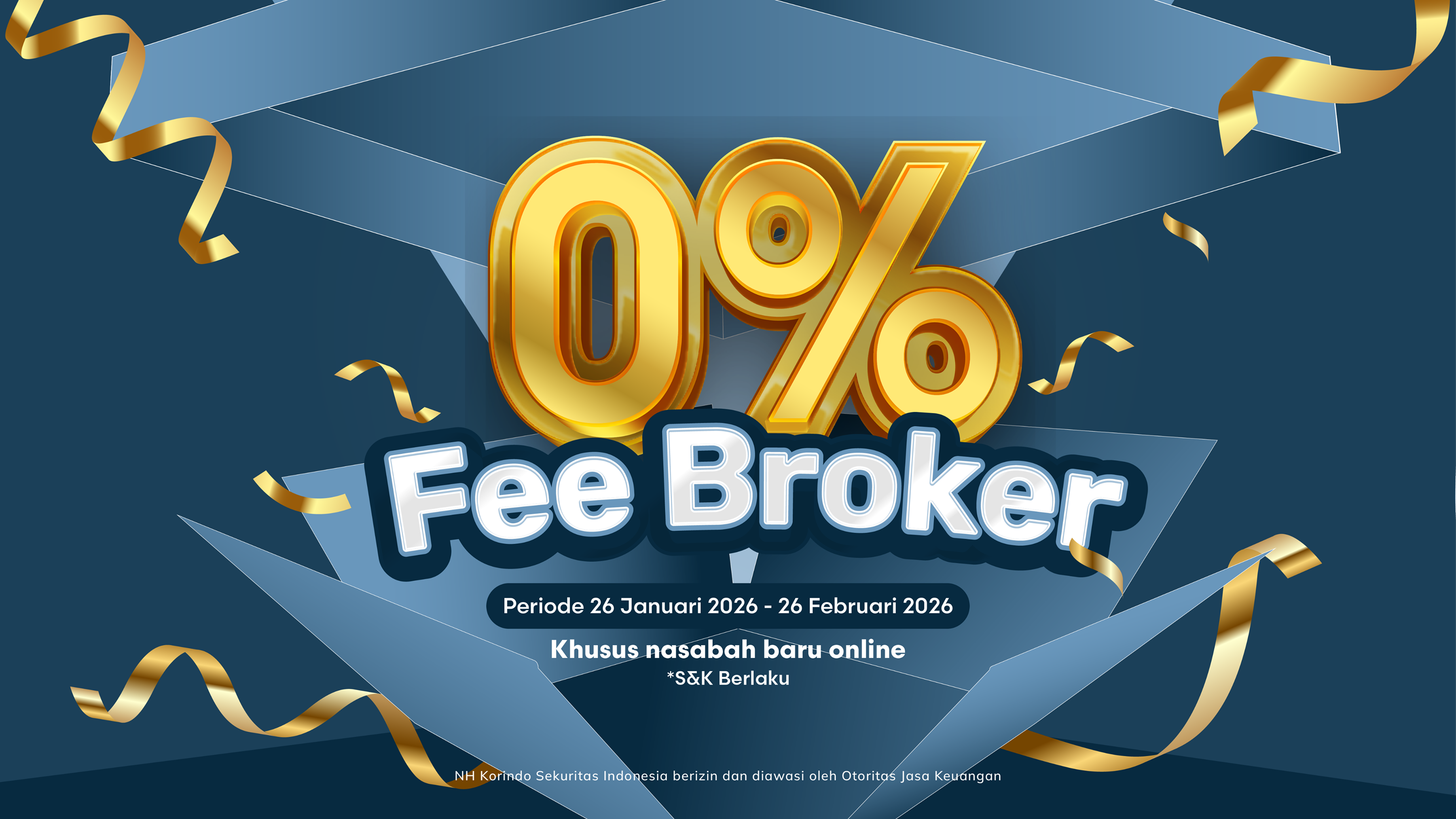
Mulai investasi dengan Biaya Broker 0%! Daftar dan buka rekening online sekarang. Nikmati biaya broker 0% khusus untuk pengguna baru |
NH Korindo Sekuritas Indonesia berizin dan diawasi Otoritas Jasa Keuangan (OJK). Untuk informasi lebih lanjut, anda dapat menghubuni CS kami via email CSO@nhsec.co.id